
Is tooth pain normal after root canal treatment?
Mild tenderness for a few days after root canal treatment can be part of normal healing. Pain that worsens, persists, or occurs with swelling should be assessed by a dentist.
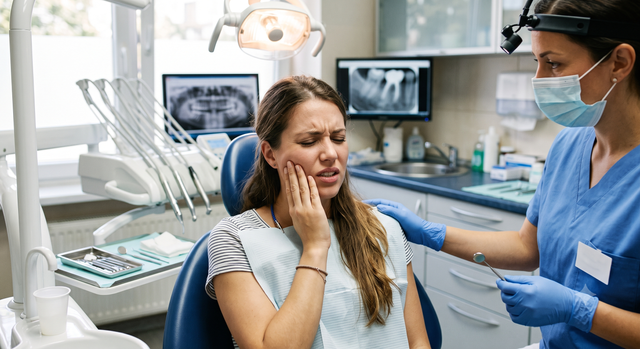
Mild soreness, pressure, or chewing sensitivity for the first few days after root canal treatment can be normal and should gradually improve. Contact your dentist if pain is severe, worsening, lasts more than a few days, or is accompanied by swelling, fever, a bad taste, or an uneven bite.
Is tooth pain normal after root canal treatment?
Mild tooth soreness, pressure, or tenderness when chewing for the first few days after root canal treatment is often a normal part of healing. The tissues around the root can remain sensitive even though the inflamed or infected pulp inside the tooth has been removed. Symptoms should usually become less noticeable day by day. Severe pain, worsening pressure, persistent symptoms, swelling, fever, or a bite that feels uneven should be assessed by the treating dentist or endodontist.
Direct answer
Some discomfort after root canal treatment is expected, particularly if the tooth was painful or infected before the procedure. Normal recovery is generally characterised by mild to moderate tenderness that steadily improves. Pain that becomes stronger, does not settle after several days, or occurs with swelling is not something to ignore.
Why can a tooth hurt after the nerve has been removed?
Root canal treatment removes inflamed or infected pulp from inside the tooth. The canals are then cleaned, shaped, disinfected, and sealed. However, the periodontal ligament, bone, and gum tissues around the root remain alive and can react to treatment.
Common reasons for short-term discomfort include:
- Temporary inflammation around the root tip
- Healing of tissues that were already irritated or infected
- Jaw muscle soreness from keeping the mouth open
- Pressure from a temporary or final filling that is slightly high
- Chewing heavily on the tooth before it has fully settled
These causes often produce manageable discomfort that improves rather than intensifies.
How long should the pain last?
There is no single timetable for every tooth. Many people notice a clear reduction in tenderness during the first few days. A tooth that had severe pre-treatment pain, infection, or inflammation around the root may take longer to feel comfortable.
The direction of change is more important than the exact number of days. Mild pain that becomes less noticeable is generally reassuring. Pain that remains unchanged, becomes stronger, or returns after initially settling deserves a clinical review.
Why does it hurt when biting?
Biting pain can occur because the ligament around the root is temporarily sensitive. It can also occur when the restoration is slightly higher than the surrounding teeth. In that situation, the treated tooth receives the first or strongest contact when the teeth close.
A high bite can feel as though the tooth is “too tall” or hits before the others. Do not simply continue chewing through significant biting pain. Your dentist can check the contacts and make a small adjustment when appropriate.
Which symptoms are not part of routine healing?
Contact your dental team if you notice:
- Pain that is increasing rather than decreasing
- Severe pressure or pain that is difficult to control
- Noticeable or growing swelling of the gum, jaw, or face
- Fever, marked fatigue, or worsening general health
- Pus, drainage, or a persistent unpleasant taste
- A temporary filling that has completely fallen out
- A clearly uneven or high bite
- Rash, itching, or another possible medication reaction
- Difficulty swallowing or breathing
Rapidly increasing facial swelling, fever with spreading infection, or difficulty swallowing or breathing requires urgent medical or dental care.
What can help during recovery?
Instructions from the dentist who treated you should take priority. General aftercare usually includes the following:
- Wait until numbness has worn off before eating to avoid biting the cheek, lip, or tongue.
- Avoid hard chewing on the treated tooth until the permanent filling or crown is complete.
- Continue gentle brushing and interdental cleaning.
- Use pain relief only if it is suitable for you and according to the label or your clinician's instructions.
- Do not increase doses, combine medicines without guidance, or place aspirin directly on the tooth or gum.
- Take antibiotics only when prescribed for a specific clinical reason.
- Attend the planned review and final restoration appointment.
People who are pregnant, have stomach ulcers, kidney or liver disease, use blood-thinning medicines, have medication allergies, or have other health conditions should ask a healthcare professional which pain medicine is appropriate.
Caring for a temporary filling
Root canal treatment may require more than one appointment. If a temporary filling is placed between visits, it may not be as strong as the final restoration. Hard and sticky foods can loosen or fracture it.
Minor surface wear does not always mean the entire filling is lost. However, contact the clinic if the filling comes out, the tooth feels open, or symptoms develop. Once treatment is complete, a permanent filling or crown may be recommended to protect the tooth from leakage and fracture.
What if the tooth starts hurting months later?
A previously treated tooth can occasionally become painful again. Possible reasons include new decay, a crack, a loose or leaking restoration, complex canal anatomy that was difficult to treat, or inflammation that has not healed as expected.
Later pain does not automatically mean that the tooth must be removed. A dentist or endodontist may use an examination, bite tests, and dental imaging to identify the cause. Depending on the findings, treatment may involve adjusting or replacing the restoration, repeating root canal treatment, or another endodontic procedure.
When should you contact a dentist?
Arrange a review when:
- Pain is not clearly improving after a few days
- Pain is worsening or has returned
- The tooth feels high when you close your mouth
- Swelling, drainage, a bad taste, or fever develops
- The temporary filling is lost or the tooth appears cracked
- You develop a reaction to prescribed medication
Early assessment can prevent a simple bite problem from continuing and can identify infection or restoration issues before they progress.
How Dentselfy approaches the first assessment
A photo- or selfie-based initial review through Dentselfy may help organise visible findings and guide the next appropriate dental step. It cannot confirm the cause of pain after root canal treatment. Accurate assessment may require a clinical examination, bite evaluation, and dental imaging.
The purpose of the initial process is to reduce uncertainty, identify relevant warning signs, and support appropriate dentist- or endodontist-led evaluation rather than provide an online diagnosis.
Key points
Mild tenderness after root canal treatment is often temporary. Improvement from day to day is a positive sign. Increasing pain, swelling, fever, or a high-bite sensation should be reported. Protect the tooth from heavy chewing and complete the final restoration and follow-up plan.
Frequently asked questions
Can a root canal tooth still feel pressure?
Yes. The nerve inside the tooth has been removed, but the living tissues around the root can still sense pressure. Temporary pressure sensitivity should settle; persistent or worsening pressure needs review.
Is hot or cold sensitivity expected after a root canal?
The treated tooth should not have the same pulpal temperature response once treatment is complete. Sensitivity may instead come from a neighbouring tooth, gum tissue, or the restoration. An examination can identify the source.
When can I eat after treatment?
You can usually eat once the numbness has fully worn off. Until the tooth has its final restoration, avoid hard, crunchy, or sticky foods on that side.
Do I still need a follow-up if there is no pain?
Yes. Lack of pain does not remove the need for the planned final filling, crown, or review. Completing the restoration is important for long-term protection.
Can root canal treatment be repeated?
In selected cases, root canal retreatment can address persistent or recurrent disease. Suitability depends on the tooth structure, restoration, canal anatomy, and imaging findings.
Related questions
- How long does soreness last after root canal treatment?
- What causes swelling after a root canal?
- Why can a root canal tooth hurt again?
- What should I do if a temporary filling falls out?
- Does every root canal tooth need a crown?
- When is root canal retreatment considered?
Medical information note
This content provides general education and cannot diagnose the cause of an individual's pain. Do not wait for a routine appointment if facial swelling is spreading, fever is present, or swallowing or breathing becomes difficult.
Key takeaways
- Mild tenderness during the first few days is often part of healing.
- Pain should trend downward rather than become stronger.
- A filling that sits too high can cause pain when biting.
- Swelling, fever, spreading facial discomfort, or trouble swallowing requires prompt assessment.
- Avoid heavy chewing on the tooth until its final restoration is complete.
Frequently asked questions
- How long is pain normal after a root canal?
- Mild soreness or chewing sensitivity often improves over the first few days. The exact duration varies with the condition of the tooth before treatment and the complexity of the procedure. Pain that is not improving or is becoming stronger should be checked.
- Why does the tooth hurt when I bite after a root canal?
- The tissues around the root may be temporarily inflamed. A temporary or permanent filling may also be slightly high, causing the tooth to take extra pressure during biting. A dentist can assess and adjust the bite if needed.
- Is throbbing pain normal after root canal treatment?
- Mild throbbing that steadily settles may occur early in recovery. Strong, sleep-disturbing, worsening, or swelling-related throbbing is not a routine healing sign and should be evaluated.
- Are antibiotics always needed after a root canal?
- No. Antibiotics are not routinely required after every root canal. A dentist decides whether they are appropriate based on signs such as spreading infection, fever, significant swelling, and the patient's health history.
- Can a root canal tooth hurt again months later?
- Yes. New decay, a crack, a leaking restoration, untreated canal anatomy, or persistent inflammation around the root can cause later symptoms. An examination and dental imaging may be needed to identify the cause.