
Smoking and Tartar Buildup
Smoking is associated with heavier tartar deposits and a higher risk of gum disease. Daily plaque control, professional cleaning, and stopping tobacco use all support better oral health.
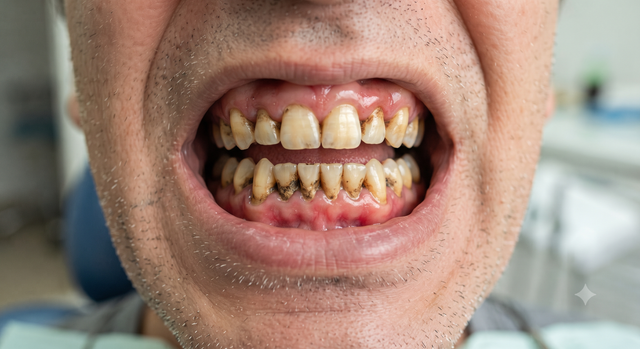
Smoking is associated with greater tartar accumulation and substantially increases the risk of gum disease. Tobacco smoke can also stain teeth, but not every brown stain is tartar. Hardened calculus cannot be brushed away and requires professional removal.
Smoking and Tartar Buildup
Smoking is associated with greater tartar accumulation and a higher risk of periodontal disease. Tartar develops when soft bacterial plaque remains on the teeth and absorbs minerals from saliva. Smoking does not produce exactly the same amount of calculus in every person, but tobacco exposure can contribute to a less healthy oral environment, more significant deposits, and more severe gum problems.
Direct Answer
People who smoke may develop more extensive tartar than nonsmokers. Smoking also affects immune defense and healing in the gums, making periodontal disease more likely and treatment outcomes less predictable. Once tartar has hardened, it cannot be removed by brushing and needs professional dental cleaning.
How Does Tartar Form?
A soft, sticky biofilm called dental plaque continuously develops on teeth and near the gumline. Brushing and cleaning between the teeth can disrupt it before it matures.
When plaque remains, calcium, phosphate, and other minerals in saliva may harden it. The resulting deposit is called tartar or dental calculus. Its rough surface can retain further plaque, making the gumline harder to clean.
Plaque is removable at home. Established calculus is not.
How May Smoking Affect Tartar Formation?
Research has found a strong association between active tobacco smoking and supragingival calculus deposits. The relationship may remain even after factors such as age, visible plaque, and gum inflammation are considered.
This does not mean that tobacco is the only factor. The amount of tartar can also be influenced by:
- Brushing and interdental cleaning habits
- Saliva composition and flow
- Dry mouth
- Tooth alignment
- Time since the last professional cleaning
- Diet and general health
- Certain medicines
- The amount and duration of tobacco exposure
It is therefore more accurate to describe smoking as an important risk indicator for heavier buildup, rather than saying every smoker will have the same outcome.
Are Tobacco Stains and Tartar the Same?
No. Tobacco smoke may leave yellow, brown, or dark external stains on enamel, restorations, and the tongue. These stains are not automatically calculus.
Tartar is a hard and rough deposit. It may appear yellowish above the gumline or brown to dark when located near or below inflamed gums. Subgingival calculus may not be visible at all.
Staining and tartar can occur together. Scraping a discolored area at home is unsafe because it may damage enamel, roots, fillings, crowns, or gum tissue.
Why Does Smoking Increase Gum Disease Risk?
Smoking affects more than appearance. It can interfere with immune function, circulation, and tissue healing. As a result:
- Fighting gum infection may become more difficult.
- The response to periodontal treatment may be reduced.
- Healing after treatment may be slower.
- Gum recession and loss of supporting bone may become more likely.
- Advanced disease may lead to loose teeth and tooth loss.
These effects make routine periodontal assessment especially important for tobacco users.
Does Less Bleeding Mean Healthier Gums?
Not necessarily. Smokers can have significant inflammation while showing less bleeding than expected. Tobacco exposure may suppress the clinical bleeding response by affecting the blood vessels and inflammatory processes in the gums.
A lack of bleeding is therefore not proof that the gums are healthy. Pocket depth, recession, tooth mobility, plaque and calculus, and bone levels must be evaluated professionally.
Can Tartar Be Removed at Home?
No. Hardened tartar cannot be removed with a toothbrush, floss, or water flosser. These tools help control soft plaque and may reduce future calculus formation.
Sharp home scalers, pins, acidic remedies, concentrated baking soda, and rough powders should not be used. They may:
- Cut or inflame the gums
- Scratch enamel or exposed roots
- Damage restorations and implants
- Push deposits beneath the gumline
- Leave disease undetected
- Remove only part of the deposit and leave a rough surface
Professional instruments are needed to remove calculus safely.
What Happens During Professional Cleaning?
A dental professional first examines the teeth, gums, and location of the deposits. Ultrasonic devices, hand instruments, or both may be used. Polishing may reduce some external tobacco stains after the hard deposits have been removed.
When there is calculus below the gumline, deep periodontal pockets, or bone loss, routine cleaning may not be sufficient. Root surface debridement, periodontal treatment, and tailored follow-up may be required.
Telling the dental team honestly about tobacco use helps them assess risk and plan care appropriately.
How Can Smokers Reduce Tartar Buildup?
Stopping tobacco use is one of the most important steps for oral and general health. Anyone who needs help stopping should speak with a qualified health professional for age-appropriate and medically suitable support.
Daily oral care should include:
- Brushing twice daily with fluoride toothpaste
- Cleaning between teeth every day with floss or appropriate interdental brushes
- Gently cleaning along the gumline without excessive pressure
- Cleaning the tongue
- Seeking assessment for persistent dry mouth
- Following an individually recommended check-up and cleaning schedule
- Never scraping hard deposits at home
Tartar-control toothpaste may slow new mineralization in some people, but it cannot remove existing calculus.
What May Change After Stopping Smoking?
Stopping smoking can support the gums' defense and healing response. In some people, bleeding may become more noticeable after quitting because an inflammatory sign that tobacco had suppressed is no longer masked. Persistent or increasing bleeding needs dental assessment.
Quitting does not make existing tartar fall off. Deposits that formed before stopping still need professional removal. Over time, remaining tobacco-free can support periodontal treatment and long-term oral health.
When Should You See a Dentist?
Arrange an examination for:
- Hard yellow, brown, or dark deposits near the gumline
- Persistent bad breath or an unpleasant taste
- Gum recession
- Redness, swelling, or tenderness
- Bleeding during brushing
- Loose or shifting teeth
- Pain while chewing
- Heavy deposits returning soon after cleaning
Facial swelling, fever, or difficulty swallowing or breathing requires urgent assessment.
How Dentselfy Approaches Initial Assessment
A photo-based Dentselfy review may provide preliminary information about visible tartar, surface staining, and gum appearance. Photographs cannot reliably distinguish every stain from calculus, detect all deposits below the gumline, or determine full periodontal status.
A definitive assessment requires an in-person dental examination, periodontal measurements, and radiographs when appropriate. The initial review is intended to reduce uncertainty and help users prepare for professional care.
Key Points
Smoking is associated with heavier tartar buildup and a greater risk of periodontal disease. Tobacco staining is not always calculus. Smoking may mask bleeding, so the absence of obvious symptoms does not rule out disease. Daily plaque control, professional cleaning, and support for stopping tobacco use all matter.
Frequently Asked Questions
Is hookah safer for tartar and gum health?
Hookah smoke still exposes the mouth to tobacco and harmful substances. Switching to another tobacco form is not a safe oral-health strategy.
Does vaping cause tartar?
The evidence specifically linking vaping to tartar is less established than it is for cigarette smoking. However, vaping should not be considered harmless to oral tissues, and personal use should be discussed with a health professional.
Should teeth be brushed immediately after smoking?
The main priorities are brushing twice daily with proper technique and cleaning between the teeth every day. Aggressive or excessively abrasive brushing can cause damage.
Can mouthwash cancel out the effects of smoking?
No. Mouthwash cannot reverse the effects of tobacco on gums or general health. It may support a routine in selected cases but does not replace brushing, interdental cleaning, professional care, or quitting.
Related Questions
- Does smoking accelerate gum recession?
- How does smoking affect healing after scaling?
- Why does smoking worsen bad breath?
- How are tobacco stains removed?
- Why can periodontal disease be detected late in smokers?
Medical Information Note
This article provides general information only. Tobacco exposure, tartar deposits, and gum health require individual assessment. Do not scrape hard deposits yourself, and seek appropriate professional support for stopping tobacco use.
Key takeaways
- Smoking is associated with heavier tartar deposits.
- Tobacco increases gum disease risk and can impair healing.
- Smoking may suppress visible gum bleeding and mask inflammation.
- Tobacco staining and hardened calculus are not the same.
- Brushing controls plaque; professional cleaning removes established tartar.
- Stopping tobacco use supports gum and overall oral health.
Frequently asked questions
- Does smoking directly cause tartar?
- Tartar forms when dental plaque mineralizes. Smoking is strongly associated with greater tartar accumulation, but the amount also varies with hygiene, saliva, tooth position, and access to professional care.
- Are tobacco stains the same as tartar?
- Not always. Tobacco may cause yellow or brown surface staining, while tartar is a hard, rough mineralized deposit. A dental examination is the safest way to distinguish them.
- Why may smokers' gums bleed less?
- Smoking can alter blood vessels and the inflammatory response in gum tissue, suppressing bleeding. Less bleeding therefore does not necessarily mean healthier gums.
- Do smokers need more frequent dental cleaning?
- There is no single interval for everyone. Frequency should be based on the rate of buildup, gum condition, previous periodontal disease, daily hygiene, and other risks.
- Can professional cleaning remove tobacco stains?
- Scaling and polishing may reduce many external surface stains. Results vary with the type of discoloration, enamel, and restorations; internal discoloration may require a different approach.
- Will tartar stop forming after quitting smoking?
- Quitting can reduce risk and support gum healing, but plaque and tartar formation do not stop completely. Daily hygiene and professional checks remain necessary.