
The Link Between Tartar and Gum Disease
Tartar forms when dental plaque hardens on the teeth and can make bacterial buildup along the gumline easier. Daily plaque control and professional cleaning help reduce the risk of gingivitis and the progression of periodontal disease.
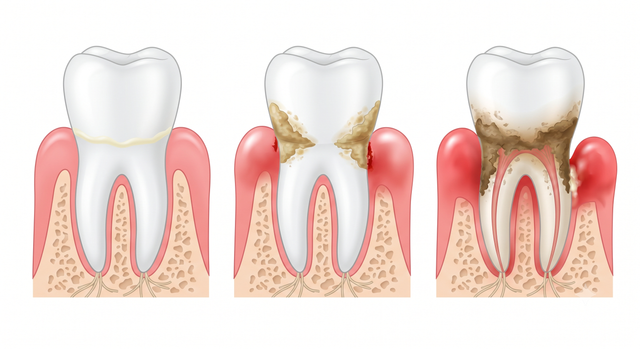
Tartar is hardened dental plaque. Its rough surface can retain more plaque near or below the gumline, helping inflammation persist. This may begin as reversible gingivitis and, in susceptible people, contribute to periodontitis affecting the tissues and bone that support the teeth. Tartar cannot be brushed away and requires professional removal.
The Link Between Tartar and Gum Disease
Tartar, also called dental calculus, develops when bacterial plaque remains on the teeth and hardens through contact with minerals in saliva. Tartar is not itself a diagnosis of gum disease, but its rough surface makes fresh plaque easier to retain. Deposits along or beneath the gumline can therefore help inflammation continue. The process may begin with red, swollen or bleeding gums known as gingivitis and, in susceptible people, progress to periodontitis, where the tissues and bone supporting the teeth are affected.
Direct Answer
Tartar and gum disease are closely connected because hardened deposits create areas that are difficult to clean with a toothbrush or floss. Bacteria within the plaque layer around tartar can irritate the gums and sustain inflammation. Once plaque has mineralized, home care cannot remove the hard deposit, so professional cleaning is needed. The severity of gum disease is not determined by the amount of visible tartar alone; smoking, diabetes, genetics, oral hygiene, previous periodontal disease and access to regular care also influence risk.
Are Plaque and Tartar the Same?
Plaque is a soft, sticky biofilm that constantly develops on teeth. It can usually be disrupted with effective brushing and cleaning between the teeth. When plaque is not removed, minerals in saliva can harden it into calculus or tartar.
The practical differences are important:
- Plaque is soft and can be controlled with daily care.
- Tartar is mineralized and needs professional removal.
- The rough surface of tartar can retain more plaque.
- Deposits below the gumline may not be visible in a mirror.
- The colour or amount of visible tartar does not reliably show how much periodontal damage is present.
This is why a person may have significant gum inflammation even when only a small amount of tartar is visible.
How Tartar Supports Gingivitis
Gingivitis is the earliest and usually reversible stage of gum disease. Bacteria in plaque near the gumline trigger an inflammatory response. The gums may become red, puffy, tender or prone to bleeding during brushing and interdental cleaning.
Tartar matters because it creates a plaque-retentive surface and can make the gumline harder to clean. As a result, bacterial biofilm may remain in contact with the tissues for longer.
At the gingivitis stage there is no loss of the bone supporting the teeth. Professional removal of plaque and tartar, combined with improved daily hygiene, can usually allow the gums to return toward health.
Can Gingivitis Progress to Periodontitis?
Not every case of gingivitis becomes periodontitis. However, persistent inflammation can extend into deeper tissues in people who are susceptible. Periodontal pockets may form between the tooth and gum, allowing bacteria to remain below the gumline. Over time, attachment and bone supporting the teeth may be lost.
Possible warning signs include:
- Bleeding that keeps returning
- Gum recession or teeth appearing longer
- Persistent bad breath or an unpleasant taste
- New gaps between teeth
- Discomfort when chewing
- Loose or shifting teeth
- Discharge from the gum margin
Periodontitis can progress with little or no pain, so routine periodontal assessment matters even when symptoms seem mild.
Tartar Above and Below the Gumline
Supragingival tartar forms above the gumline and is often seen behind the lower front teeth or near the cheek side of upper molars. It may look white, yellow or darker when stained.
Subgingival tartar forms inside periodontal pockets. It may be dark, firmly attached to the root surface and hidden from view. A dental professional assesses these deposits with periodontal instruments and, when needed, dental radiographs to evaluate supporting bone levels.
Removing subgingival deposits may require more than a routine surface cleaning, particularly when periodontal pockets and attachment loss are present.
Why Professional Removal Is Necessary
Once tartar has mineralized, an ordinary toothbrush cannot remove it. Dentists and dental hygienists use controlled hand instruments and ultrasonic devices to detach deposits. If disease extends below the gums, root surfaces may also need deeper cleaning and smoothing.
Trying to scrape tartar with metal or sharp objects at home can cause:
- Cuts and bleeding
- Scratches on enamel or exposed roots
- Damage to fillings, crowns or veneers
- Movement of bacteria deeper beneath the gums
- Delay in diagnosing active periodontal disease
Temporary sensitivity or a feeling of wider spaces can occur after cleaning. This may reflect the removal of deposits that filled the spaces or the reduction of swollen gum tissue. Severe or lasting symptoms should be discussed with the treating clinician.
Does Cleaning Tartar Cure Gum Disease?
In plaque-induced gingivitis, professional cleaning and consistent home care can often resolve inflammation. Periodontitis is different. A standard cleaning may not be enough if deep pockets, attachment loss or bone loss are present.
Depending on severity, care may include scaling and root planing, targeted antimicrobial measures, periodontal maintenance or surgery. The goal is to control infection and inflammation, reduce pocket depth where possible and protect the remaining support around the teeth.
Long-term success depends on both professional treatment and daily plaque control. People with a history of periodontitis usually require an individualized maintenance schedule because the disease can become active again.
Who May Have a Higher Risk?
Tartar can develop in anyone, but the likelihood of significant gum disease may be higher with:
- Smoking or other tobacco exposure
- Poorly controlled diabetes
- Previous periodontitis
- A family history of severe periodontal disease
- Dry mouth caused by medical conditions or medicines
- Crowded teeth that are difficult to clean
- Hormonal changes
- Limited or irregular dental care
A risk factor does not guarantee that disease will develop. It does mean that closer monitoring and a more personalized prevention plan may be appropriate.
Reducing Tartar and Gum Inflammation
It may not be possible to prevent every mineralized deposit, but daily plaque control can reduce the speed of buildup and the inflammatory burden.
- Brush twice a day with fluoride toothpaste.
- Clean between the teeth daily with floss or an appropriately sized interdental brush.
- Use gentle pressure along the gumline rather than aggressive scrubbing.
- Avoid smoking and tobacco.
- Work with the healthcare team to manage diabetes.
- Attend dental visits at the interval recommended for your individual risk.
- Do not ignore ongoing bleeding, swelling or bad breath.
The right cleaning interval varies. Some people remain healthy with routine annual reviews, while those with rapid calculus formation or previous periodontal disease may need more frequent periodontal maintenance.
When to See a Dentist
Arrange an evaluation if the gums bleed repeatedly, remain red or swollen, recede, or if bad breath persists despite good hygiene. Tooth mobility, new spacing and pain when chewing need prompt attention. Facial swelling, fever, pus or difficulty swallowing can require urgent professional care.
During an examination, the clinician may measure gum pockets, record bleeding, assess mobility and tartar, and take radiographs when bone levels need to be reviewed.
How Dentselfy Approaches the Process
A photo- or selfie-based initial assessment through Dentselfy may help identify visible deposits, redness or recession and support an informed first direction. However, a photo cannot reliably measure periodontal pocket depth, detect all subgingival tartar or show the full extent of bone loss.
Online assessment therefore complements rather than replaces an in-person dental examination. Its role is to make visible concerns easier to understand, help direct the person to appropriate care and reduce uncertainty before a clinical visit.
Key Points
Tartar is mineralized plaque and cannot be brushed away. By retaining fresh bacterial plaque, it can help gingivitis persist and may contribute to periodontitis in susceptible individuals. Early professional cleaning and effective home care protect gum health. When bone loss or tooth mobility is present, more comprehensive periodontal treatment may be required.
Frequently Asked Questions
Is tartar removal painful?
Comfort varies with inflammation, sensitivity, deposit depth and individual pain threshold. Local anaesthesia can be used when deeper treatment is needed.
Does scaling wear away enamel?
Professional scaling performed with appropriate instruments is intended to remove deposits, not enamel. Uncontrolled scraping at home can damage surfaces.
Can tartar cause bad breath?
Tartar and the plaque attached to it can retain bacteria associated with odour. Bad breath can also come from the tongue, cavities, dry mouth or non-dental conditions.
Will tartar return after cleaning?
Yes. Plaque forms continuously and can mineralize again. Daily cleaning and regular professional reviews help slow recurrence.
Related Questions
When should bleeding gums be taken seriously? What is normal after tartar removal? Can gum recession grow back? How does periodontal disease cause bad breath? What is the difference between routine cleaning and deep cleaning?
Medical Information Note
This content is educational. The cause and stage of gum disease cannot be determined from symptoms or photographs alone. Diagnosis requires a clinical periodontal examination and, when indicated, radiographic assessment.
Key takeaways
- Tartar develops when plaque remains on the teeth and becomes mineralized.
- Its rough surface can make new plaque accumulation easier around the gumline.
- Gingivitis can often be reversed, while periodontitis can damage supporting bone and tissues.
- Hardened tartar should be removed professionally rather than scraped at home.
- Brushing, interdental cleaning and risk-based dental visits help limit recurrence.
Frequently asked questions
- Does tartar directly cause periodontitis?
- Periodontitis has several contributing factors. Tartar does not act alone, but its rough surface retains plaque and can help inflammation persist, which may contribute to disease progression in susceptible people.
- Can tartar be removed by brushing?
- No. Soft plaque can be removed with daily oral hygiene, but mineralized tartar requires professional dental instruments.
- Should I stop brushing if my gums bleed?
- Usually not. Continue gentle cleaning with a soft-bristled toothbrush. Recurrent bleeding or bleeding that does not improve should be assessed by a dental professional.
- Does a dental cleaning make teeth loose?
- Professional cleaning does not loosen healthy teeth. In advanced gum disease, supporting tissue may already be lost, and existing mobility can become more noticeable after heavy deposits are removed.
- How often should tartar be removed?
- There is no single interval for everyone. A dentist determines recall frequency according to buildup rate, gum health, smoking, diabetes, home care and previous periodontal disease.
- Is it safe to scrape tartar at home?
- No. Sharp tools can injure the gums, scratch tooth surfaces or restorations and delay appropriate periodontal care.