
How do tooth stains form?
Tooth stains can develop when pigments attach to enamel, plaque or tartar, or when color changes within enamel and dentin. Identifying the stain type helps determine appropriate care.
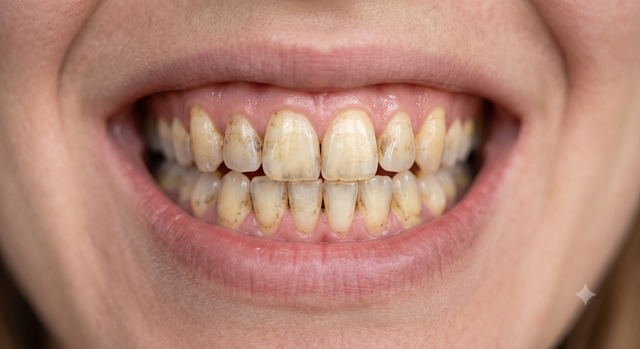
Tooth stains form when colored compounds collect on enamel or when color changes within enamel and dentin. Coffee, tea, tobacco, plaque and tartar commonly cause external stains, while fluorosis, certain medicines, trauma and decay can cause deeper discoloration.
How do tooth stains form?
Tooth stains form when colored compounds attach to the tooth surface or when the color changes within enamel and dentin. Coffee, tea, tobacco, plaque and tartar mainly create surface stains. Fluorosis, certain medicines, dental trauma, decay and changes inside the tooth can cause deeper discoloration. The color matters, but so do the stain’s location, texture and speed of development.
Direct answer
Enamel is not perfectly smooth. Plaque, microscopic surface irregularities and repeated contact with pigments make it easier for colored molecules to collect. Other stains develop inside the tooth during formation or after eruption. For this reason, brushing, professional cleaning and whitening do not work equally well for every type of stain.
Main types of tooth stains
Extrinsic stains
Extrinsic stains affect the outer enamel surface. Common contributors include coffee, black tea, red wine, dark soft drinks, tobacco, dark berries, strongly colored sauces, plaque and tartar. Prolonged or inappropriate use of certain antiseptic mouth rinses may also contribute.
A stain may begin as a thin surface film. Over time, pigments can bind more strongly to plaque and rough tartar, producing yellow, brown or nearly black deposits.
Intrinsic stains
Intrinsic discoloration develops within enamel or dentin. It may occur while teeth are forming or after they erupt. Possible causes include certain medicines during tooth development, dental fluorosis, enamel development differences, aging, internal bleeding after trauma, pulp injury, decay, older restorations and changes after root canal treatment.
These stains cannot usually be removed with surface polishing alone. Management depends on their depth and the health of the tooth.
Combined discoloration
A person may naturally have warmer-colored dentin while also developing surface stains from coffee, tobacco or tartar. Both internal and external factors then shape the final appearance.
How do plaque and tartar make staining worse?
Plaque is a sticky bacterial film that forms on teeth. Pigments attach to it more easily than to clean enamel. If plaque is not removed, it can mineralize and become tartar.
Tartar has a rough surface and collects more pigment. Yellow or brown deposits are often visible near the gumline. Once tartar has hardened, a toothbrush cannot remove it fully; professional cleaning is required.
What can stain color suggest?
Color alone cannot diagnose the cause, but it can provide clues.
Yellow stains
These may be linked to plaque, tobacco, pigmented drinks or the natural yellow color of dentin becoming more visible.
Brown stains
Coffee, tea, tobacco and tartar are common causes. If the surface is breaking down or a cavity is present, decay must be considered.
White spots
White areas can reflect enamel development differences, fluorosis or early mineral loss. Chalky spots close to the gumline may be associated with plaque-related demineralization.
One gray or dark tooth
A single tooth that turns gray or dark may have experienced trauma, internal bleeding, pulp damage, root canal treatment or another internal change. It needs professional assessment.
Black dots
A black area can be surface stain, tartar or decay. It is not reliable to distinguish them at home based on color alone.
Is a stain the same as a cavity?
No. A surface stain may change the color without active loss of tooth structure. A cavity develops when acids produced by bacteria cause mineral loss in enamel and dentin.
A dark area that becomes rough, enlarges, forms a hole, traps food or causes sensitivity raises concern for decay. However, early decay can also begin as a painless white spot. A clinical examination is the safest way to tell the difference.
Why do children develop tooth stains?
In children, discoloration can be related to plaque, iron-containing products, enamel development differences, fluorosis, trauma or early decay. Newly erupted permanent teeth also often look more yellow than primary teeth because of normal structural differences.
Persistent white, brown or black areas, especially with surface breakdown or discomfort, should be evaluated by a pediatric dentist.
How are stains assessed?
A dentist may evaluate whether the change lies on the surface or inside the tooth, whether one or several teeth are involved, its color and texture, plaque and tartar, decay, restorations, trauma history, medicines, sensitivity and pulp vitality. Dental X-rays may be needed.
Depending on the findings, care may include professional cleaning, whitening, decay treatment, microabrasion, resin infiltration, bonding or another approach.
Why can abrasive home methods be harmful?
Lemon juice, vinegar, excessive baking soda, rough powders and abrasive charcoal products may appear to scrub stains away. They can also wear enamel, roughen the surface, irritate gums and make future staining easier.
A safer starting point is identifying the cause. Fluoride toothpaste, a soft brush, interdental cleaning and routine dental visits help reduce plaque-related surface discoloration.
When should you see a dentist?
Arrange an assessment if one tooth suddenly becomes gray or dark, a mark is enlarging, a hole appears, there is pain or increasing sensitivity, the tooth was injured, or discoloration occurs with bleeding gums, swelling or persistent bad breath. A new lasting color change in a child should also be checked.
How does Dentselfy approach this process?
A clear, well-lit photograph can show the distribution of visible stains and whether one or several teeth are affected. It cannot reliably reveal stain depth, active decay or pulp health.
Dentselfy’s photo-based initial assessment can organize visible observations and help users prepare for a dental consultation. Final diagnosis and treatment planning require a clinical examination and, when indicated, dental X-rays.
Key points
Tooth stains are not caused only by coffee and tea. Plaque, tartar, enamel development, fluorosis, trauma and decay can all alter tooth color. Surface stains may respond to cleaning, while internal discoloration may require other cosmetic or restorative care. A sudden change in one tooth should be assessed before cosmetic treatment.
Frequently asked questions
Are coffee stains permanent?
Many coffee stains are external and can improve with professional cleaning or appropriate whitening. Long-term exposure, tartar and underlying intrinsic color can affect the result.
Will tartar removal remove the stains too?
Pigments attached to tartar and many surface stains can be removed during professional cleaning. Natural tooth color and internal discoloration remain.
Why do white spots appear after braces?
Plaque can collect around brackets and cause mineral loss in enamel. Early assessment helps stop progression and guide cosmetic management.
Why is there a dark line around a filling?
Possible explanations include surface stain, material discoloration, leakage or recurrent decay. Appearance alone cannot determine the cause.
Does every stained tooth need whitening?
No. The cause should be identified first. Some stains need cleaning, some can be monitored, and decay, trauma or developmental changes require different treatment.
Medical information note
This article provides general information. Only a dental assessment can determine whether a colored area is a surface stain, early decay, enamel loss or a change inside the tooth.
Key takeaways
- Tooth stains may be extrinsic, intrinsic or a combination of both.
- Coffee, tea, tobacco and pigmented foods mainly cause surface stains.
- Plaque and tartar can make colored compounds attach more easily.
- White, brown, gray and black areas can have different causes.
- A sudden color change in one tooth should be assessed.
Frequently asked questions
- Is every dark mark a cavity?
- No. Some marks are external stains from food, drinks, tobacco, plaque or tartar. A dark area with a hole, roughness, sensitivity or pain should be assessed for decay.
- Can tooth stains be brushed away?
- Some recent mild surface stains may improve with good hygiene. Hardened tartar, deep stains and discoloration inside the tooth cannot be removed by brushing alone.
- What causes white spots?
- Possible causes include enamel development differences, fluorosis, early mineral loss and plaque around orthodontic brackets. A dental examination is needed to identify the cause.
- What does one gray or dark tooth mean?
- It may be linked to trauma, pulp damage, decay, an old restoration or previous root canal treatment. A new change should be examined.
- Does whitening remove every stain?
- No. Whitening may improve certain external and internal discolorations, but fillings, crowns, deep developmental stains and decay may require different care.