
What to Watch at Home When Your Gums Bleed
Home care for bleeding gums should focus on gentle plaque removal rather than hiding the bleeding temporarily. Recurrent, heavy, painful, or unexplained bleeding needs professional assessment.
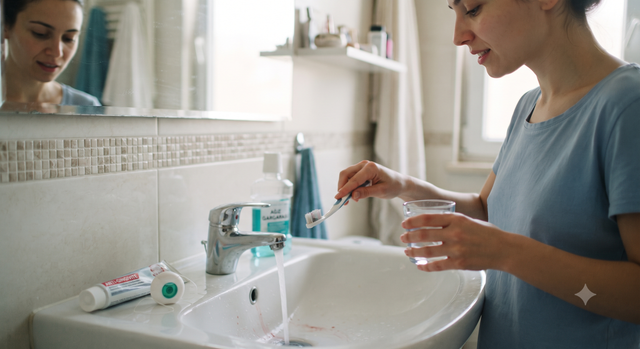
When gums bleed, continue gentle cleaning with a soft toothbrush, clean between the teeth with an appropriate method, and avoid irritating home mixtures. Recurrent bleeding, bleeding that does not improve within several days, painful swelling, loose teeth, or bleeding elsewhere requires assessment.
What to Watch at Home When Your Gums Bleed
Home care for bleeding gums should not focus only on stopping the visible blood. The more important goal is to remove plaque gently and avoid further irritation. Use a soft-bristled toothbrush, clean the gumline without pressing hard, and clean between the teeth with an appropriate method. Avoid concentrated salt, hydrogen peroxide, lemon, baking soda, or unprescribed medicated mouthwashes. Repeated bleeding or bleeding that does not improve within several days should be assessed by a dentist.
Direct Answer
Continue brushing twice a day with fluoride toothpaste and a soft toothbrush, even if a small amount of bleeding occurs. Use gentle interdental cleaning, avoid tobacco and irritating home remedies, and apply steady pressure with clean gauze only if there is a small active bleed. Arrange a dental appointment if the gums bleed regularly, are swollen or painful, or if bad breath, recession, loose teeth, or bleeding elsewhere is present.
What Is the Goal of Home Care?
The goal is not simply to make the blood disappear. Bleeding is often a sign that gum tissue is inflamed, commonly because plaque has remained at the gumline. If cleaning stops completely, plaque can continue to build and the inflammation may persist.
Safe home care has three priorities: remove plaque gently and consistently, avoid chemicals or techniques that irritate tissue, and recognize symptoms that require professional care.
Do Not Stop Brushing Completely
Avoiding the bleeding area may feel sensible, but it can leave more plaque behind. Instead, reduce pressure and improve technique.
Choose a toothbrush with soft or extra-soft bristles and a head that comfortably reaches the back teeth. Replace it when the bristles become frayed. If using a powered brush and pressing too hard is a concern, a pressure sensor can help.
Move the brush in small, controlled motions along the line where the teeth and gums meet. Scrubbing harder does not clean better and may increase irritation or contribute to gum recession.
Most people should brush in the morning and before bed for about two minutes using fluoride toothpaste. Spit out the toothpaste after brushing and avoid rinsing immediately with a large amount of water so fluoride can remain on the teeth longer.
Clean Between the Teeth Gently
Toothbrush bristles cannot fully clean tight spaces between teeth. Plaque left there can maintain inflammation and bleeding. Depending on the spacing, dental floss, an appropriately sized interdental brush, or another dentist-recommended tool may be suitable.
Do not snap floss forcefully into the gum. Guide it between the teeth, curve it against the tooth surface, and move it gently. An interdental brush should fit comfortably and should never be forced into a tight space.
When a person begins flossing inflamed gums, mild bleeding may occur for a few days. With correct daily cleaning, it should reduce. Arrange an examination if bleeding has not improved after about a week, becomes heavier, or is accompanied by pain.
How Can a Small Bleed Be Controlled?
For a small surface bleed, place clean gauze or a clean lint-free material over the area and apply gentle, continuous pressure. Lifting it repeatedly to check can disrupt the clot.
If the bleeding followed a direct injury, do not keep brushing the injured area. Seek prompt care if a tooth is broken, displaced, or unusually loose. Heavy spontaneous bleeding or bleeding that does not stop with steady direct pressure should not be monitored at home.
Can Warm Salt Water Be Used?
A mild warm salt-water rinse may provide short-term comfort for some people. It does not mechanically remove plaque or cure gum disease. A highly concentrated solution can sting, dry, or irritate the mouth.
It should be mild, not swallowed, and not used excessively for long periods. It never replaces brushing, interdental cleaning, or dental assessment.
Which Home Remedies Should Be Avoided?
Baking soda, lemon, and vinegar
Acidic or abrasive mixtures may damage sensitive gum tissue and tooth enamel. Lemon and vinegar are acidic, while rubbing baking soda directly onto the gums may worsen irritation.
Hydrogen peroxide
Applying household hydrogen peroxide in a concentrated form or directly to the gums may cause chemical irritation. Use it only when a dental professional has recommended a specific product and method.
Aspirin placed on the gum
Placing aspirin directly against a painful or bleeding gum can cause a chemical burn. Pain medicines should only be taken by mouth when appropriate and according to medical or pharmacy advice.
Unprescribed antibiotics or medicated mouthwash
Bleeding gums alone do not mean antibiotics are needed. Medicated rinses such as chlorhexidine may be useful for selected short periods, but they can cause staining and taste changes and should be used under dental guidance.
Aggressive brushing
Trying to remove plaque by scrubbing harder can increase trauma, sensitivity, and recession. Effective cleaning depends on coverage and technique, not force.
Diet, Hydration, and Daily Habits
A balanced diet supports oral and general health, but it is unsafe to assume that bleeding gums are caused only by a vitamin deficiency. Starting supplements without assessment may delay treatment of the actual cause.
Drink enough water, limit frequent sugary snacks and drinks, avoid tobacco, and choose softer foods temporarily if sharp or hard foods irritate the area. Tell the dentist about medicines and medical conditions.
People taking prescribed blood-thinning medicines should not stop them on their own. If bleeding has increased, contact the prescriber and the dentist.
When Should You See a Dentist?
Arrange a visit if bleeding occurs regularly, does not improve after several days of consistent gentle care, or is accompanied by red, swollen, tender, or painful gums. Persistent bad breath, recession, tooth mobility, visible tartar, an ulcer, a red patch, or a lump also needs assessment.
Tartar cannot be removed safely with a toothbrush at home. Professional cleaning and a personalized plan may be needed.
Which Symptoms Need Urgent Care?
Seek urgent dental or medical help for heavy oral bleeding that does not stop with continuous direct pressure, rapidly increasing swelling of the face or throat, difficulty breathing or swallowing, serious facial trauma, fainting, marked weakness, or bleeding gums together with unexplained bruising or bleeding elsewhere.
How Dentselfy Can Support the First Assessment
Clear oral photographs shared through Dentselfy may help identify visible plaque, redness, swelling, tartar, or localized irritation and guide the next step. A photo-based review cannot confirm a diagnosis or rule out medical causes. An in-person examination is recommended whenever bleeding is recurrent, painful, heavy, or unclear.
Key Takeaways
- Do not usually stop cleaning because a small amount of bleeding occurs.
- A soft toothbrush and appropriate interdental care help control plaque.
- Irritating DIY mixtures and unprescribed medicated products are unsafe choices.
- Recurrent bleeding generally needs professional assessment.
- Heavy bleeding, rapid swelling, or breathing difficulty is urgent.
Medical Information Notice
This content is for general education and does not replace a personal examination. See a dentist for recurrent, heavy, painful, or unexplained gum bleeding. Seek medical advice if there is easy bruising, frequent nosebleeds, or bleeding from other sites.
Key takeaways
- Do not usually stop brushing completely because the gums bleed.
- Use a soft toothbrush and gentle, consistent plaque removal.
- Avoid peroxide, lemon, concentrated salt, or abrasive baking soda mixtures.
- Use medicated mouthwash or antibiotics only when professionally advised.
- Heavy, recurrent, or persistent bleeding requires assessment.
Frequently asked questions
- Should I keep brushing if my gums bleed?
- For most plaque-related bleeding, gentle brushing with a soft toothbrush should continue. Stopping completely can allow more plaque to collect and maintain inflammation.
- Does salt water help bleeding gums?
- A mild warm salt-water rinse may feel soothing for a short time, but it does not treat the underlying cause. Concentrated mixtures can irritate tissue.
- Can I apply hydrogen peroxide or baking soda?
- Applying concentrated peroxide, baking soda, lemon, or similar mixtures directly to the gums may cause irritation. Do not use them without professional guidance.
- Is bleeding normal when starting flossing?
- Inflamed gums may bleed mildly during the first few days of gentle flossing. It should improve with correct technique. See a dentist if it does not improve after about a week.
- When is bleeding from the mouth an emergency?
- Heavy bleeding that does not stop with steady direct pressure, breathing or swallowing difficulty, rapidly increasing facial swelling, or serious trauma requires urgent care.