
How to Brush Your Teeth When You Have a Mouth Sore
Brushing should usually continue when you have a mouth sore, but it needs to be gentler. A soft toothbrush, light pressure and careful toothpaste choice can help protect oral hygiene without adding irritation.
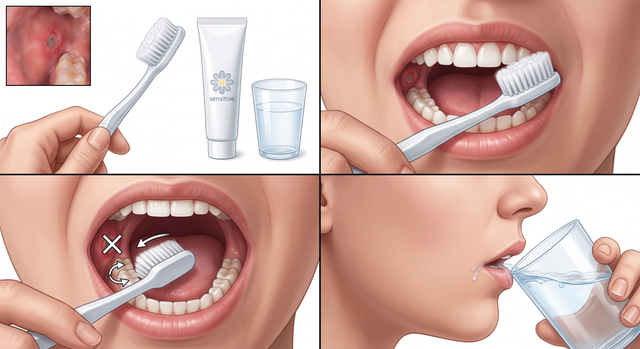
When you have a mouth sore, you should usually keep brushing your teeth, but more gently. Use a soft-bristled toothbrush, light pressure and avoid scrubbing directly over the sore. If the sore grows, keeps returning or does not heal, a dentist should evaluate it.
How to Brush Your Teeth When You Have a Mouth Sore
When you have a mouth sore, stopping toothbrushing completely is usually not the best choice. Plaque, food debris and bacteria can build up quickly and make the mouth feel even more uncomfortable. The safer approach is to keep cleaning your teeth with a soft-bristled toothbrush, very light pressure and controlled movements, while avoiding hard contact directly on the sore.
Direct Answer
You can usually brush your teeth when you have a mouth sore, but you should do it gently. Choose a soft toothbrush, use small movements and slow down around the sore area. If your toothpaste burns, a milder fluoride toothpaste may be more comfortable. A sore that is large, worsening, recurring or not healing should be assessed by a dentist.
Why You Should Not Stop Brushing Completely
Mouth sores can make brushing feel painful. Because of this, some people avoid brushing for a few days. That can create a second problem: plaque and food particles stay on the teeth and around the gums.
When plaque increases, gum tenderness and bad breath may become more noticeable. Food debris can also irritate sensitive tissue near the sore. The goal is not to brush the sore itself. The goal is to keep the teeth and gumline clean without adding trauma to the irritated area.
Choose the Right Toothbrush
A soft-bristled toothbrush is usually the safest choice when the inside of the mouth is irritated. Medium or hard bristles can feel harsh on the cheeks, lips, tongue edges and gumline. A small brush head can also help because it gives better control in tight areas.
If you use an electric toothbrush, use the lowest comfortable setting and avoid pressing the brush head into the sore. Let the brush clean the tooth surface rather than pushing it against soft tissue.
Gentle Brushing Technique
Start with the areas that do not hurt. This helps you maintain a calm rhythm before you approach the sore area. Use small circular or sweeping movements near the gumline, but keep the pressure light.
When brushing near the sore, slow down and change the angle if the bristles touch it. Do not scrub the ulcer surface. If the area is too sensitive, clean the nearby teeth as carefully as possible and return to your normal routine when the soreness improves.
Rinsing gently with water after meals may also help remove food particles before they settle near the sore. This does not replace brushing, but it can make brushing feel easier later.
Toothpaste and Mouth Sore Irritation
Some toothpastes can sting when they touch irritated tissue, especially if they have a strong flavor or heavy foaming effect. A mild fluoride toothpaste may be more comfortable during a sore episode. Fluoride remains important because it helps protect teeth from decay, so avoid switching randomly to non-fluoride products unless your dentist recommends it.
If you notice that sores appear repeatedly after using the same toothpaste, mention this to your dentist. Product ingredients, brushing pressure and other oral health factors may all need to be reviewed.
Habits That Can Reduce Discomfort
While the sore is healing, avoid foods and drinks that make the pain sharper. Spicy, salty, acidic, very hot or crunchy foods may irritate the surface. Examples include citrus drinks, sharp crisps, rough bread crusts and very hot tea or coffee.
Keep your toothbrush clean, do not share it and replace it if the bristles are worn. If mouthwash burns, stop using it until you speak with a dental professional. Alcohol-containing mouth rinses can feel especially uncomfortable for some people with mouth sores.
When to See a Dentist
Many small mouth sores improve on their own, but not every sore is a simple canker sore. A dental check is important if the sore is getting larger, bleeding, very painful, recurring frequently, has hard or unusual edges, or makes swallowing difficult.
Professional evaluation is also important if the sore lasts close to two weeks without clear improvement or continues for more than three weeks. Fever, facial swelling, pus-like discharge or several sores at once are signs that you should not rely only on home care.
How Dentselfy Approaches This Situation
Dentselfy can help people understand when a dental concern may need professional attention. A photo-based initial review may provide general direction, but it cannot replace a clinical examination, especially for mouth sores.
If a sore looks unusual, lasts too long or keeps returning, Dentselfy’s role is to guide the person toward a dentist-led assessment rather than promise an online diagnosis. The aim is clarity, safety and appropriate next steps.
Key Points
Brushing with a mouth sore is about control, not force. A soft toothbrush, light pressure and a calmer technique can help you maintain oral hygiene while reducing irritation. If the sore behaves differently from a minor irritation, do not try to diagnose it yourself. A dentist can check whether it is related to trauma, infection, gum disease, medication effects or another cause.
Frequently Asked Questions
Is brushing harmful when I have a mouth sore?
Gentle brushing is usually not harmful. The problem is aggressive brushing, hard bristles or repeatedly scraping the sore.
Should I floss with a mouth sore?
You can usually floss carefully, unless the sore is directly at the gumline and flossing causes sharp pain. Avoid snapping floss into the gums.
Can salt water replace brushing?
No. Gentle rinsing may feel soothing for some people, but it does not remove plaque from tooth surfaces as brushing does.
Can a toothbrush cause a mouth sore?
Yes. Hard brushing, worn bristles or accidentally hitting the cheek or gum can create small injuries that feel like mouth sores.
Related Questions
Why do canker sores keep coming back? Is a canker sore the same as a cold sore? Can toothpaste cause mouth ulcers? What does a gum sore mean? How should children brush when they have a mouth sore?
Medical Information Note
This content does not provide diagnosis or treatment. The cause of a mouth sore varies from person to person. See a dentist or qualified healthcare professional for persistent, enlarging, bleeding, frequently recurring or unusual sores.
Key takeaways
- Stopping brushing completely may allow plaque and food debris to build up.
- A soft-bristled toothbrush is usually more comfortable around irritated tissue.
- Avoid direct hard contact with the sore.
- Spicy, acidic, salty and crunchy foods may increase discomfort.
- Persistent, recurring or unusual sores should be checked by a dental professional.
Frequently asked questions
- Should I brush my teeth if I have a mouth sore?
- Yes, in most cases you should continue brushing. Use a soft toothbrush, reduce pressure and avoid scrubbing the sore directly.
- Can brushing make a mouth sore worse?
- Aggressive brushing, hard bristles or poor technique can irritate the sore. Gentle brushing helps maintain hygiene while reducing irritation.
- What toothpaste is best when my mouth sore stings?
- A mild fluoride toothpaste may be more comfortable. If toothpaste repeatedly causes burning or sores, ask your dentist which formula is suitable for you.
- Can I skip brushing if the sore hurts too much?
- It is usually better to brush more gently rather than stop completely. If pain is severe, a dentist should assess the sore.
- How long should a mouth sore take to heal?
- Many minor mouth sores improve within one to two weeks. If there is no clear improvement or it lasts longer than three weeks, seek professional advice.
- Can Dentselfy diagnose a mouth sore online?
- Dentselfy cannot give a definite diagnosis from online content or a photo alone. It may support initial guidance, but a dental examination is needed for a clear assessment.